Panagbenga Festival: A Guide to Baguio’s Flower Fest
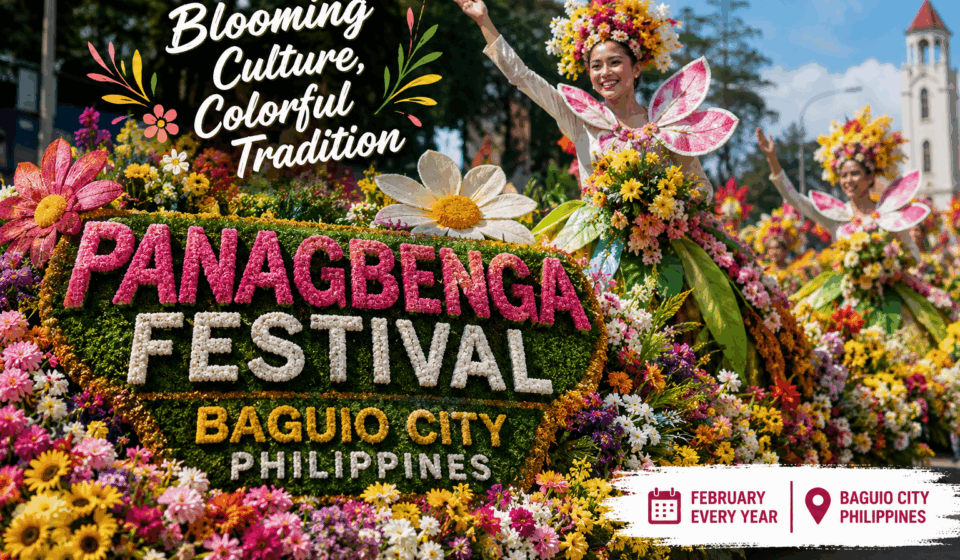
The cool mountain air of Baguio City turns thick with the scent of marigolds, chrysanthemums, everlasting, roses, orchids, and sunflowers. At the same time, the streets fill with drumbeats, dancers wearing flower headdresses, wide-eyed lowlanders with cameras and smartphones ready to take in as much of the vibe as their memory cards could accommodate, and floats stacked so high with blossoms they look like gardens rolling past wheels.
This is the Panagbenga Festival! And once you’ve stood in a crowd of thousands cheering for a flower-covered truck, you understand why locals plan their whole year around it.
So, if you’re curious about all the fuss, here’s your complete guide to the celebration that turns Baguio into the country’s flower capital.
What Is the Panagbenga Festival?
Baguio’s Panagbenga Festival is an annual celebration of flowers and community spirit lasting the whole month of February in the Benguet highlands. It’s part-garden show, part-street party, and part-homecoming, drawing locals back to Baguio and pulling visitors up the winding mountain roads from the lowlands.
It’s the most immersive way to experience and appreciate the mountain region’s unique culture, and solidifies the city’s position as the country’s summer capital and flower-growing hub.
What Does Panagbenga Mean?
Panagbenga is a native Kankanaey term for “season of blooming” or “a time for flowering,” which is tied to the Cordillera region’s farming calendar. It describes the months when flowers burst into color across the terraced gardens of Benguet.
The name was purposely chosen to reflect the literal flowering season and the symbolic meaning of new growth after hardship.
Why Is the Panagbenga Festival Celebrated?
While the region has been known as a flower paradise for many decades, the Panagbenga Festival is only in its 30th year, having been established in 1996, about half a decade after the devastating earthquake in 1990 that shook the city’s confidence.
Local leaders and artists wanted a way to rebuild morale and celebrate the region’s floral trade.
So, what started as a modest flower show has grown into one of the country’s largest cultural festivals, celebrated for its flowers, its Cordilleran heritage, and its undeniable role in boosting local tourism.
Panagbenga Festival Philippines: What to Expect
Ask anyone about the Panagbenga Festival Philippines travelers rave about, and they’ll most likely mention the parades first. In reality, this festival runs a full month, with floral displays, street dancing, food fairs, art exhibits, and community gatherings all over Baguio’s parks and main roads.
Headlining the festivities are the Mardi Gras-like Grand Street Dance Parade and the Rose Parade-esque Grand Floral Float Parade. Contingents from schools and barangays perform choreographed dances wearing costumes built with flowers and woven fabric.
The float parade follows days later, with massive vehicles covered in fresh blooms rolling down Session Road while crowds line the sidewalks for a better view. There are garden exhibits too, and night markets, food bazaars, and live performances keeping the energy alive for weeks.
If you’re planning a wider trip around Philippine festivals and entertainment, Playtime covers many events worth building into your itinerary, including regional celebrations and trending cultural stories across the country.
Panagbenga Festival Parade Highlights
Two events are a MUST!
- Grand Street Dance Parade – elaborate costumes and synchronized dance routines that take participants months to prepare, with performers scored on choreography, costume design, and how well they channel the spirit of the Panagbenga Festival celebration
- Grand Floral Float Parade – pure visual spectacle of towering flower sculptures shaped like animals or Baguio landmarks
Panagbenga Festival Activities to Explore
Away from the parade routes are…
- Open-air galleries at Baguio’s different parks
- Street fairs packed with food stalls, handmade crafts, live music on Session Road
- Garden exhibits showcasing the region’s flower-growing talent at Burnham Park
- Cultural shows highlighting Cordilleran weaving and traditional dance
Best Things to Do at the Panagbenga Festival

It really helps to have a plan when attending the Panagbenga Festival since there’s so much happening across the city.
You could wander through the floral exhibit early in the day before crowds thicken and the light gets harsh for photos. The city’s scenic backdrops make for some of the country’s best festival photography.
Take a leisurely walk down Session Road and enjoy food stalls selling strawberry taho, grilled corn, grilled dried pusit, and local delicacies.
Pop up at Burnham Park and immerse yourself in cultural performances, including traditional dances, without fighting parade-day crowds.
Want a change in pace? Head to the Botanical Gardens and find a quiet escape with its serene walking paths and native plant displays that feel worlds away from the noise on Session Road.
Watch the Grand Floral Float Parade
You clearly won’t appreciate the Panagbenga Festival without watching the floral float parade. Participants spend weeks designing and building their floats, with growers covering entire vehicles in fresh flowers before they wilt.
No wonder these manmade marvels are some of the most Instagrammable spectacles in the Philippines.
Experience Baguio’s Local Culture
Beyond the flowers, dance routines, handmade crafts, traditional food, and community gatherings also give the Panagbenga Festival depth and meaning.
Cordilleran dance troupes perform throughout the celebration, often accompanied by gongs and chanting that trace back generations. Local vendors sell woven textiles and woodcarvings alongside festival food. And that turns the event into a showcase of living traditions.
How to Enjoy Panagbenga Festival Like a Local
There’s no better way to enjoy the Panagbenga Festival than doing it as locals do. And that means treating it as an endurance event as much as a celebration.
So, check the official schedule ahead of time, since parade routes can change slightly year to year. Also, try to arrive before sunrise to avoid jockeying for position of the best viewing spots against a large crowd.
Baguio’s mountain weather can shift from sunny to chilly within minutes, so dressing in layers should keep you comfy through a long day outdoors.
Also, respect communities hosting the festival by keeping public spaces clean and following crowd instructions from local marshals.
What to Bring to Panagbenga Festival

Here are the must-haves when attending Baguio’s flower-blooming festival.
- Comfortable walking shoes (you’ll be walking long stretches between parade routes and park exhibits)
- Lightweight jacket (for Baguio’s cool mornings)
- Refillable water bottle (more practical too)
- Fully charged phone or camera for capturing the floats
- Cash (kept securely) to buy items at food stalls and craft vendors, especially on Session Road
Where to Explore in Baguio During Panagbenga
The following places make excellent detours between Panagbenga Festival events.
- Session Road
- Burnham Park
- Mines View Park
- Botanical Garden
- Strawberry Farms (in La Trinidad)
- Wright Park (and The Mansion)
- Igorot Stone Kingdom
- Mirador Heritage and Eco-Spirituality Park
Why Panagbenga Festival Matters to Filipinos
Many Filipinos consider the Panagbenga Festival as something more than a flower show. It’s a living showcase of Cordilleran heritage built on centuries-old traditions of Benguet’s indigenous communities.
It brings together residents, performers, business owners, and leaders in a shared effort that reflects Baguio’s identity as a city defined by resilience.
The festival draws visitors eager to witness Cordilleran culture up close. And its continuing popularity shows just how much Filipinos value local traditions and hometown pride.
So, if you want more of this kind of cultural storytelling, Playtime regularly covers festivals and local entertainment happenings across the Philippines.
FAQ About Panagbenga Festival
What is the Panagbenga Festival in the Philippines?
A yearly celebration of Baguio’s blooming season and rich Cordilleran heritage, featuring parades and community events throughout February.
When is Panagbenga Festival usually celebrated?
The entire month of February, although it’s best to check official schedules for a more accurate lineup of events.
What are the main Panagbenga Festival activities?
Grand Street Dance Parade, Grand Floral Float Parade, garden exhibits (at Burnham Park), street fairs (along Session Road), and Cordilleran food and dance showcases.
Where can I find more Philippine entertainment and event stories?
Playtime. It’s a solid resource for planning your next trip or keeping up with what’s happening around the country, covering festivals, cultural events, and trending entertainment from across the land.
Explore More Philippine Festivals With Playtime
Baguio City’s Panagbenga Festival is just one thread in the country’s packed calendar of local celebrations, and there’s a lot more worth discovering.
Check out Playtime! It keeps you in the loop on the stories shaping Filipino culture all year round, from local and regional festivals to the latest buzz in the entertainment industry. `
Visit Playtime and see what else is blooming across the country.